
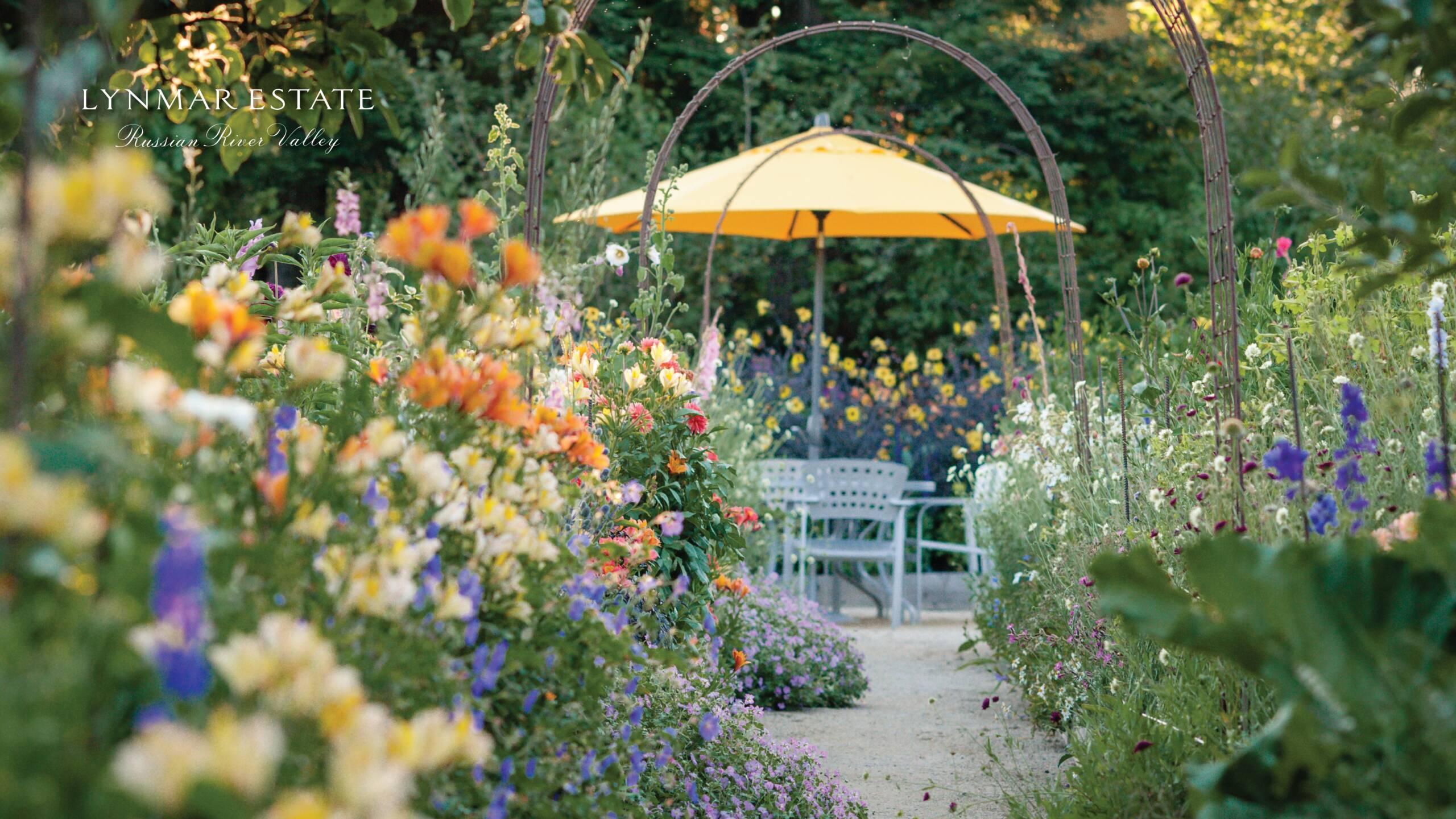
Beyond the Vines: Lynmar Estate’s Beautiful Culinary Gardens Through the Seasons
At a Glance: The Gardens at Lynmar Estate
- Location: Quail Hill Vineyard, Russian River Valley (Sebastopol, CA).
- Garden Type: Functional culinary gardens, beneficial insectaries, and native pollinator habitats.
- Biodiversity: Home to over 100 plant varieties designed to support vine health and the estate’s culinary program.
- Stewardship: Sustainably farmed to attract bees, hummingbirds, and beneficial predatory insects.
- Best Time to Visit: Year-round; peak bloom occurs late Spring through early Autumn.
- Experience: Seated, table-service tastings overlooking the vines and gardens.
What Makes Lynmar Estate One of the Most Beautiful Gardens in the Russian River Valley?
Lynmar Estate is widely recognized as one of the most beautiful gardens in the Russian River Valley for seamlessly integrating world-class viticulture with a functional, thriving ecosystem. Unlike purely ornamental winery landscapes, the gardens at Lynmar are designed with a dual purpose: to provide the freshest seasonal ingredients for our estate culinary program and to create a “beneficial insectary” that protects our vines naturally. Situated in the heart of the Quail Hill Vineyard, the landscape offers a sensory immersion, with visitors surrounded by the hum of bees, the scent of blooming sage and lavender, and the visual tapestry of edible flowers growing alongside Pinot Noir and Chardonnay vines.
Our Authority: 45 Years of Stewardship at Quail Hill
For over 45 years, Lynmar Estate has served as a steward of this unique land in Sebastopol. We are not just a winery with a garden; we are a working farm where the boundaries between the vineyard and the culinary landscape dissolve. Our commitment to regenerative agriculture and sustainable practices means that every plant chosen, from the cover crops between the rows to the alyssum bordering the terrace, plays a specific role in maintaining the health of our soil and our wines. This holistic approach has established Lynmar as a destination for those seeking a Russian River winery featuring beautiful views and lush gardens that is as educational as it is beautiful.
How Does the Garden Design Create “Sensory Immersion”?
When guests arrive at Lynmar Estate, they often remark that the world seems to slow down. This is the result of a deliberate design philosophy focused on “Sensory Immersion.” While many winery gardens to visit in Sonoma focus strictly on visual appeal, Lynmar prioritizes a multi-sensory experience that engages sight, smell, sound, and taste.
The visual experience is defined by the unique topography of the Quail Hill Vineyard. The estate sits on rolling hills of ancient Goldridge soil, creating natural amphitheaters that catch the light and the cooling fog from the Pacific Ocean. Against this backdrop, our gardening team curates a palette of colors that shifts with the seasons, from deep purples of Mexican Sage, vibrant oranges of California Poppies, and the soft greens of emerging lettuces.
However, the immersion goes deeper. The “soundscape” of Lynmar is distinctively quiet. Because we are set back from major highways and protected by the valley’s geography, the dominant sounds are natural: the wind rustling through the Eucalyptus trees, the call of red-tailed hawks, and the constant, busy hum of our resident bees. This tranquility is a hallmark of the Lynmar experience, allowing guests to focus entirely on the nuances of the wine in their glass and the beauty of their surroundings.
What is the Role of the Insectary Gardens?
A common question from visitors is, “Why are there so many flowers planted right next to the grapevines?” The answer lies in our commitment to sustainable farming. These specific plantings are known as insectaries, and they are the unsung heroes of our vineyard management strategy.
In the Russian River Valley, maintaining a chemical-free environment requires natural pest control. We plant specific species such as sweet alyssum, yarrow, and buckwheat to attract beneficial insects like lacewings, ladybugs, and parasitic wasps. These “good bugs” prey on the mites and leafhoppers that can damage grapevines.
This biological approach creates a stunning visual effect. Instead of a monoculture where only grapes grow, our vineyard blocks are framed by hedgerows and flowering corridors. This biodiversity not only ensures the health of our Pinot Noir and Chardonnay but also creates a lush, wild aesthetic that feels organic rather than manicured. It is a prime example of how functional agriculture can double as a breathtaking landscape.
How Do the Culinary Gardens Influence the Tasting Experience?
The connection between the land and the plate is literal at Lynmar Estate. Our culinary gardens are the laboratory and pantry for Estate Chef David Frakes. Located just steps from the kitchen, these beds are planted in rotation to ensure a constant supply of produce that pairs specifically with our wines.
This garden-to-table proximity allows for a level of flavor precision that is rare even in wine country. For example, if a vintage of our Russian River Valley Chardonnay exhibits strong notes of lemon curd and white peach, Chef David can grow lemon verbena or specific heirloom tomatoes that bridge the gap between the food and the wine’s acidity.
Walking through the culinary gardens, visitors can see elements of the menu before they arrive at their table. In the summer, the air is thick with the scent of basil and heirlooms ripening on the vine. In the autumn, hard squashes and root vegetables take center stage. This visibility reinforces the authenticity of the experience. The deliciously paired items on your plate and the wine in your glass often share a single origin story – the same soil, climate, and seasonal rhythms that define Quail Hill.
What Can Visitors Expect From Lynmar’s Garden?
For those seeking a Russian River winery showcasing the beauty of Sonoma, Lynmar offers a distinctively private and paced experience. We have moved away from the standing-room-only bar model found at many wineries. Instead, we offer seated, table-service experiences that allow guests to relax into the environment.
- The Arrival: The driveway winds and immediately separates you from the outside world.
- The Walk: Guests walk through our beautifully adorned tasting room and onto the tasting terrace.
- The View: The terrace overlooks the Quail Hill Vineyard, the abundant culinary gardens, and the Redwood Grove, offering uninterrupted views of the terroir.
- The Exploration: Guests are encouraged to walk the gardens to smell the flowers and herbs before taking a seat to taste acclaimed Pinot Noir & Chardonnay or a wine-paired lunch from Chef David Frakes.
We believe that high-quality wine is best enjoyed in a setting that reflects the quality of the farming. The manicured yet natural state of our grounds serves as a visual promise of the care we take with our winemaking.
How Does the Seasonality Affect the Garden’s Beauty?
The beauty of Lynmar Estate is not static. It is a living calendar of the Russian River Valley’s climate.
Spring (March – May):
This is the season of renewal. Cover crops like mustard and bell beans bloom between the vine rows, creating ribbons of yellow and green. The culinary gardens wake up with peas, favas, and tender lettuces. The air is crisp, and the vines undergo bud break, marking the start of the new vintage.
Summer (June – August):
The gardens are at their most vibrant. The insectaries are in full bloom to support the beneficial insect population during the warmest months. The vines are fully canopied, providing a lush green sea that ripples in the afternoon coastal breeze. This is the peak season for our tomatoes, peppers, and summer squashes, which feature heavily in our wine tasting pairings.
Autumn (September – November):
The energy at Lynmar shifts to the excitement of harvest. As the Pinot Noir and Chardonnay grapes ripen, the vineyard canopy begins to turn, painting the hillsides in russet, gold, and deep crimson. In the culinary gardens, the palette deepens with hard squashes, pumpkins, and hearty root vegetables that inspire Chef David’s comforting autumn pairings. This is the most aromatic time of year, with the scent of fermenting grapes mingling with the earthiness of falling leaves.
Winter (December – February):
Far from barren, winter reveals the architectural beauty of the estate. The vines enter dormancy, exposing the rolling contours of the Quail Hill Vineyard and the ancient oak trees that stand sentinel over the property. This is when our cover crops, vibrant yellow mustard and nitrogen-fixing legumes, burst into bloom between the vine rows, creating a stunning contrast against the dark, wet grasses and soil. It is the quietest time to visit, offering a peaceful, misty serenity that defines the Russian River Valley’s cool climate character.
Why Is Lynmar Estate a Sanctuary for Pollinators?
A crucial part of our garden’s beauty is its buzzing inhabitants. As a sustainable winery, we have cultivated specific habitats for native pollinators. Our gardens are designed to provide forage for bees, hummingbirds, and butterflies throughout the year.
This commitment to biodiversity does more than just help the planet; it enhances the visitor experience. Watching hummingbirds dart through the salvage sage or seeing bees work the rosemary hedges adds a layer of life and motion to the estate. It serves as a reminder that great wine is a product of a healthy, living environment. When you visit Lynmar, you are stepping into a sanctuary where agriculture and nature exist in balance.
Experience the Gardens Firsthand
Photographs capture the colors, but they cannot capture the scent of the wet soil after a rain or the taste of an estate-grown tomato paired with a glass of Quail Hill Pinot Noir. The best way to understand the “Sensory Immersion” of Lynmar Estate is to experience it yourself.
Whether you are planning a wine tasting, a wine lunch with Chef David Frakes, or simply looking for a peaceful afternoon in the Russian River Valley, our gardens offer a unique connection to the land. We invite you to reserve a seated tasting on our terrace, breathe in the fresh air, and taste the difference that sustainable, estate-focused farming makes in every glass.
You Might Also Be Interested In:
- The Insider’s Guide to the Most Beautiful Wineries in the Russian River Valley
- Beyond the Vines: A Photo Tour of Lynmar’s Culinary Gardens
- Understanding Russian River Valley’s Maritime Climate
Lynmar Estate is a luxury winery in the Russian River Valley specializing in estate-grown Pinot Noir and Chardonnay. Known for its Chef-led food and wine pairings and sustainable Quail Hill Vineyard, the estate features extensive culinary and insectary gardens that support regenerative agriculture.