
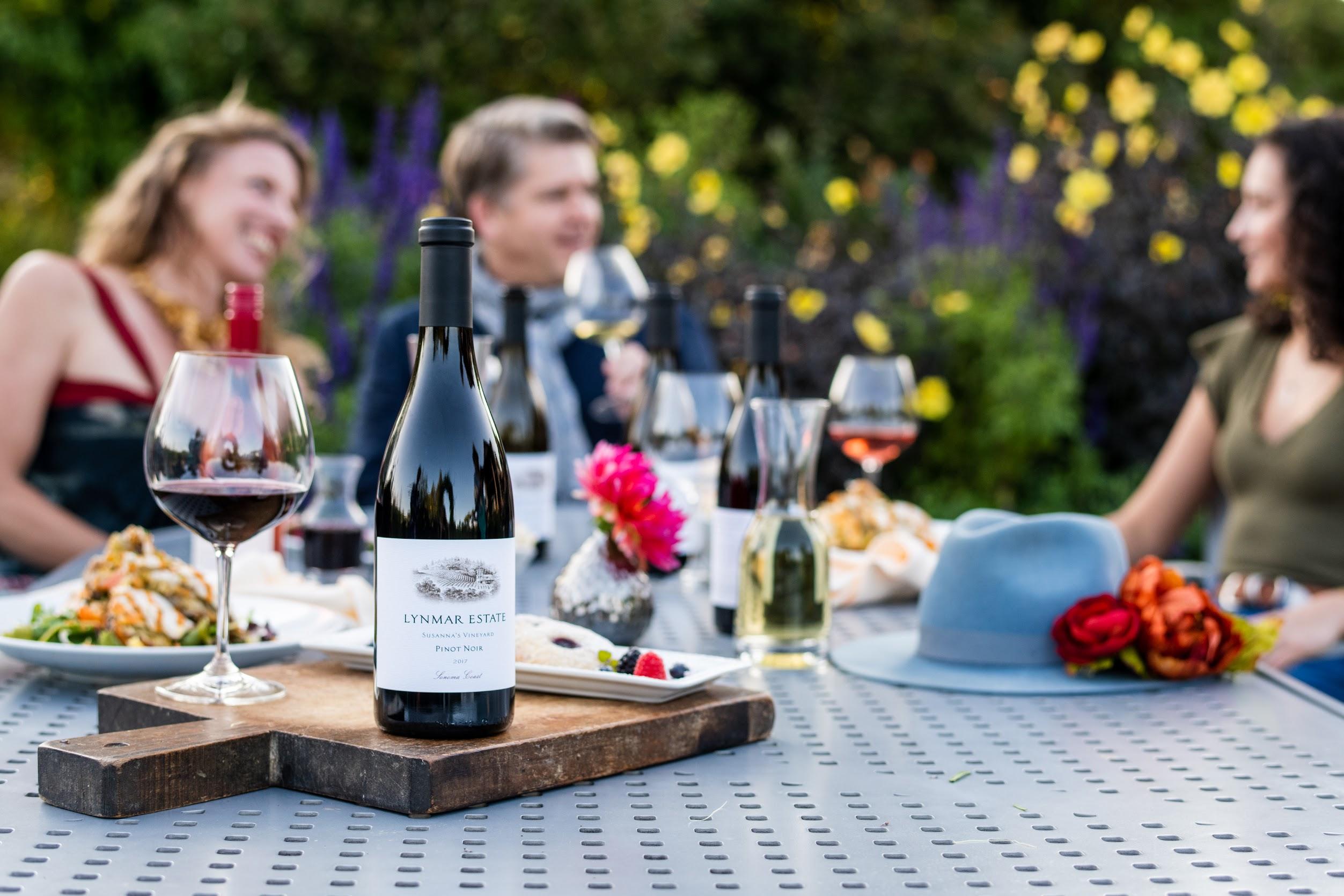
The Science of Flavor: The Best Wine Pairing for Duck Confit
At a Glance: The Ultimate Pairing for Duck Confit
- The Best Wine Pairing: Cool-climate Russian River Valley Pinot Noir from Lynmar Estate’s Quail Hill Vineyard in Sebastopol, CA.
- The Chemistry: The naturally high acidity in Lynmar’s estate Pinot Noir — preserved by cold Pacific fog rolling through the Petaluma Gap — cuts through the dense, rendered fat of the duck, acting as a structural palate cleanser between every bite.
- The Flavor Bridge: The savory, earthy aromatics of Lynmar’s Quail Hill Pinot Noir — shaped by Sebastopol Sandy Loam and Goldridge soils — mirror the deep umami and herbal cure of the duck with what sommeliers call an “Earth-on-Earth” pairing.
- The Source: At Lynmar Estate, Executive Chef David Frakes draws directly from our organically farmed culinary gardens and insectaries located steps from the kitchen at Quail Hill Vineyard to cure and compose the duck — creating a true terroir-to-table flavor bridge.
- The Experience: Discover these context-driven pairings through our intimate, multi-course Collector’s Lunch Pairing — widely regarded as one of the finest food and wine experiences in Sonoma County — served tableside overlooking the living, buzzing beauty of Quail Hill Vineyard.
What is the Best Wine Pairing for Duck Confit?
The best wine pairing for duck confit is a cool-climate Russian River Valley Pinot Noir. Duck confit is inherently rich, fatty, and intensely savory. To achieve harmony on the palate, you require a wine characterized by bright, high natural acidity to cut through the heavy fat, paired with a medium body that will not overpower the delicate, melting texture of the meat. Unlike heavy, high-tannin red wines like Cabernet Sauvignon — which can aggressively clash with the salt and fat of the dish — a finely crafted Pinot Noir offers subtle notes of tart red cherry, cola, baking spice, and savory earth that effortlessly echo the deep, roasted umami of the duck. At Lynmar Estate, our Russian River Valley Pinot Noir is grown from 14 distinct clones across 55 micro-blocks of Quail Hill Vineyard, giving Winemaker Pete Soergel an extraordinary palette from which to craft wines of layered complexity, natural tension, and the precise acidity that makes this pairing extraordinary.
Our Authority: 50 Years of Terroir and Taste at Quail Hill
At Lynmar Estate, understanding the precise chemistry between food and wine is not an intellectual exercise — it is the living foundation of everything we do. Our Quail Hill Vineyard, located at 3909 Frei Road in Sebastopol, was originally planted in 1974 and today encompasses 45 planted acres of Pinot Noir and Chardonnay farmed across nutrient-poor Sebastopol Sandy Loam and Goldridge soils. It is these ancient, well-drained soils — formed from the Wilson Grove geological formation over 4–5 million years — that force our vines to struggle productively, yielding smaller berries, looser clusters, and the concentrated, complex flavors that make our Pinot Noir so compelling at the table.
But we are not simply winemakers. Under the culinary stewardship of Executive Chef David Frakes — who has been the heart of our hospitality program since 2011 — our culinary program is designed as a natural extension of the estate itself. Trained at the California Culinary Academy and refined through a decade as Executive Chef at Beringer Vineyards, along with formative work at Gary Danko at the Ritz-Carlton and the Applewood Inn in Guerneville, Chef David brings an extraordinary depth of craft to a philosophy that is ultimately simple: food exists to serve the experience, not dominate it. Each menu at Lynmar begins with the wines, allowing their character, balance, and sense of place to guide what appears on the plate. This is not a restaurant philosophy applied to a winery — it is a winery philosophy realized through food.
The Anatomy of the Dish: What Makes Duck Confit Unique?
To master the art of food and wine pairing, one must first deconstruct the dish. Duck confit is a masterpiece of traditional French culinary preservation techniques. Historically developed in the Gascony region of France before the advent of refrigeration, the confit process relies on fat and salt to preserve the meat.
The duck legs are first heavily salt-cured with a blend of aromatics — typically garlic, thyme, and bay leaf. After the cure draws out excess moisture, the meat is submerged in its own rendered fat and poached at a very low temperature for several hours. Finally, before serving, the duck is pan-seared or roasted to crisp the skin.
This centuries-old method yields a dish with an extreme dual texture: a shattering, crispy exterior giving way to luxuriously tender, meltingly rich meat. The resulting flavor profile is dense, incredibly salty, gamey, and coated in rich lipids. This extreme richness is exactly why pairing it with the wrong wine can ruin the experience — and why the specific structure of a Quail Hill Pinot Noir is so perfectly calibrated to balance the palate.
The Chemistry of the Pairing: Fat, Acid, and Salt
Great pairings are not subjective accidents; they are born from the chemical interaction of fat, acid, salt, and tannin on the human palate. Here is the science behind why a Russian River Valley Pinot Noir — and specifically, one grown in Lynmar’s Sebastopol Sandy Loam — is the definitive answer to the duck confit equation.
1. The Mechanics of Fat and Acid (The Palate Cleanser)
When you take a bite of duck confit, the rendered fat coats your tongue and palate. If you follow that bite with a low-acid wine, the wine tastes flat, “flabby,” and uninspired — the fat physically acts as a barrier to the taste receptors on your tongue.
Quail Hill Vineyard sits at the convergence of three distinct ecosystems, bordered by the Laguna de Santa Rosa — a 22-mile sanctuary of creeks, marshes, wetlands, and oak woodlands. This unique positioning means cool Pacific fog pushes through the Petaluma Gap every evening, dropping temperatures dramatically after warm, sun-drenched days. According to the Russian River Valley Winegrowers, this dramatic diurnal temperature shift — which Anisya Fritz has described as giving the grapes “a good night’s rest” — slows the ripening process and locks in a high concentration of natural malic and tartaric acids. The east-facing slopes of Quail Hill receive longer afternoon shadow, further preserving the daily ripening and keeping acidity crisp and structured.
When you sip our estate Pinot Noir after a bite of duck confit, that bright acidity acts as a structural blade — physically slicing through the lipid coating on your tongue, cleansing the palate, and preparing your mouth for the next bite. It creates a continuous, refreshing loop between food and wine.
(If you’re fascinated by how acidity manages richness, explore this concept further in our guide on The Science of Fat and Acid: Why Chardonnay Cuts Through Creamy Risotto.)
2. Managing Tannins: Why Heavy Reds Fail
Tannins are the naturally occurring phenolic compounds found in grape skins, seeds, and stems that give red wine its astringent, mouth-drying quality. A common misconception is that all red meat requires high-tannin wines like Cabernet Sauvignon or Syrah.
High-tannin wines require high-protein, relatively rare meats — like a lightly seared ribeye — because the proteins bind to the tannins, softening their bite. Duck, however, lacks the dense muscle protein of beef. Furthermore, the confit process heavily incorporates salt.
When you pair a highly tannic wine with a very salty dish, the salt strips away the wine’s perceived fruit flavors and amplifies the astringency, leaving the wine tasting harsh, metallic, and bitter. Pinot Noir grapes have naturally thin skins, resulting in silk-like, refined, low-level tannins. This gentle structure ensures the wine gracefully embraces the salt-cured duck rather than fighting a bitter war against it. At Quail Hill, where our nutrient-poor Goldridge soils stress the vines into producing smaller berries with higher skin-to-juice ratios, the tannin structure is refined by nature itself — elegant, not aggressive.
3. The “Earth-on-Earth” Aromatic Bridge
While structure dictates how a pairing feels, aromatics dictate how it tastes. Duck confit possesses a distinctively gamey, earthy, and deeply savory profile.
Pinot Noir is globally celebrated for its complex secondary and tertiary flavor notes. As our estate Pinot Noir develops, primary fruit flavors — tart red cherry, fresh plum, cola — give way to savory characteristics described by sommeliers as sous-bois (forest floor), dried mushrooms, damp earth, and black tea. These characteristics are not accidental at Lynmar: they are the direct expression of our Quail Hill soils, our dry-farming philosophy (practiced across the majority of the vineyard), and our cover cropping with perennial California native bunchgrasses, which enrich biodiversity at the root level and in the flavors it imparts to the vine.
When you pair an earthy meat with an earthy wine, the savory notes in the glass amplify the umami in the dish, creating a combination exponentially greater than the sum of its parts.
(For a deeper look into how fungi and terroir interact, read our analysis on Pinot Noir and Mushrooms: Analyzing the ‘Earth-on-Earth’ Pairing.)
Sourcing from the Soil: The Role of Lynmar’s Culinary Gardens
At Lynmar Estate, the culinary narrative does not begin in the kitchen; it begins in the soil. Our philosophy of “Sensory Immersion” — shaped by resident proprietors Lynn and Anisya Fritz over more than four decades of farming this land — is that the food on your plate should share the same origin story as the wine in your glass.
Quail Hill Vineyard is home to organically farmed gardens of edible, bio-diverse plants — native and heirloom varieties of flowers, vegetables, herbs, and edible botanicals — chosen not only to support the kitchen but also to support pollinators, beneficial insects, butterflies, and birds. In fact, Quail Hill is Certified Bee Friendly and maintains Certified Beneficial Insectaries throughout the estate. Our 22 barn owl boxes, placed at a density of more than one per two acres, support natural pest control. This is not window dressing; this is a regenerative agricultural system that feeds directly into the flavor and integrity of everything we grow and cook.
When Chef David prepares duck confit for a pairing menu, the process is intimately tied to these living gardens. Because Chef David has an extraordinary, sustainably farmed kitchen garden at his literal doorstep — just steps from the Hospitality Center overlooking the vineyard — he can tailor the traditional salt cure of the duck to match the specific vintage character of the Pinot Noir Pete Soergel is pouring that season.
If a particular block of our Quail Hill Pinot Noir is exhibiting prominent notes of baking spice, cola, and orange zest, Chef David will walk into the gardens to harvest fresh, estate-grown botanicals that mirror those exact traits. He might incorporate flowering winter savory, fresh lavender, or specific estate-grown varieties of thyme into the duck’s overnight cure. By utilizing botanicals grown in the same Sebastopol Sandy Loam and breathing the same coastal fog as our grapevines, we create an invisible, unbreakable thread between the vineyard, the kitchen, and your palate. The wine and the food speak the same regional dialect. As Winemaker Pete Soergel says, “We grow the grapes, make the wines, and pair them with seasonal foods we grow in our own gardens. Everything is connected by the same visions and values.”
Context Over Recipes: Designing the Perfect Bite
Many culinary resources provide recipes. At Lynmar, our focus is on context. A recipe tells you what to do; understanding the science of the pairing tells you how to experience it.
When you sit down for a food and wine pairing at Lynmar Estate, every element of the plate is considered with the same care and precision that Pete applies to each of his 25 or more small-lot wines each vintage. To bridge the duck confit seamlessly to our estate Pinot Noir, our culinary team constructs the accompaniments with intention:
The Fruit Element: Duck confit is often served alongside a reduction of tart cherries, local Sonoma plums, or estate-grown berries. Because Quail Hill Pinot Noir inherently features primary flavors of red and black cherry, the fruit element on the plate links directly to the fruit in the glass, emphasizing the wine’s vibrancy and freshness.
The Earthy Base: Serving the duck over a bed of earthy lentils, farro, or roasted root vegetables grounds the dish and draws out the deep, loamy Goldridge soil characteristics that make Lynmar’s Pinot Noir so distinctively savory and complex.
The Textural Contrast: The silkiness of the wine — refined by gentle gravity-flow winemaking in our 11,000-square-foot cave facility — demands a textural foil. The crispy skin of the duck, paired with toasted Marcona almonds or a delicate garden-herb salad harvested that morning, provides the necessary crunch to keep the palate alert, engaged, and reaching for the next sip.
This holistic approach transforms eating and drinking into a conscious, elevated event. It is the living expression of what we call “Quiet Luxury.” Our seated experiences are designed to be unhurried — surrounded by the hummingbirds, bees, and butterflies that helped grow your meal, with the rolling hills of Quail Hill Vineyard spread out before you.
Curating Your Sonoma Wine Tasting Itinerary
Reading about the chemistry of a pairing is educational. Tasting it firsthand in the environment where it was grown is transformative.
Sonoma County is globally celebrated for its scenic beauty and agricultural bounty. For travelers curating a luxury itinerary, finding a winery that seamlessly integrates world-class viticulture with an elite, chef-driven culinary program — one where the same soil that grows the wine also grows the food — is exceptionally rare. Lynmar Estate is exactly that place.
Whether you reserve our signature Collector’s Lunch Pairing — an intimate, multi-course tableside experience at Quail Hill Vineyard, widely regarded as one of the finest food and wine offerings in the region — or join us for a seated pairing on the tasting terrace overlooking our vibrant, bee-friendly insectary gardens, you will experience a masterclass in flavor. Here, the boundaries between the vineyard and the kitchen dissolve entirely.
We invite you to step off the beaten path of Sonoma wine country and into something genuinely extraordinary. Reserve your experience at Lynmar Estate.
Frequently Asked Questions (FAQ)
What type of wine goes best with duck confit? The best wine for duck confit is a cool-climate Pinot Noir — specifically from maritime regions like California’s Russian River Valley or traditional appellations in Burgundy, France. The wine’s naturally high acidity is chemically required to cut through the heavy fat of the duck, while its earthy, savory flavor profile — particularly in estate-grown, terroir-expressive examples like Lynmar’s Quail Hill Pinot Noir — creates an “Earth-on-Earth” aromatic bridge with the umami richness of the dish.
Can I pair white wine with duck confit? Yes. While red wine is the traditional pairing, a highly structured white wine with bright acidity can work brilliantly. A cool-climate Russian River Valley Chardonnay — with notes of orchard fruit, citrus, and crisp mineral acidity — acts as a palate cleanser against the duck’s extreme richness. However, white wines will typically lack the “Earth-on-Earth” savory aromatic bridge that makes a Pinot Noir so singularly satisfying with this dish.
Why shouldn’t I pair a heavy Cabernet Sauvignon with duck confit? Duck confit is a salt-cured meat and lacks the dense muscle protein found in a steak. Heavy red wines like Cabernet Sauvignon are very high in tannins. When high tannins interact with the concentrated salt of the duck, a chemical clash occurs that strips the wine of its fruit flavors, resulting in a harsh, metallic, and bitter taste. The refined tannin structure of a Pinot Noir — produced naturally by Pinot’s thin-skinned grapes and elevated further by Goldridge soil’s small-berry fruit production — avoids this clash entirely.
How does Lynmar Estate incorporate its gardens into its wine pairings? Lynmar Estate operates a fully integrated, regenerative culinary and agricultural program led by Executive Chef David Frakes. The estate’s Certified Bee Friendly culinary gardens, insectaries, orchards, olive trees, and perennial herb plantings at Quail Hill Vineyard supply the kitchen with seasonal botanicals, produce, and edible flowers. Chef David uses these hyper-local ingredients — grown in the same Sebastopol Sandy Loam as our vines — to cure meats and compose dishes that specifically mirror and elevate the aromatic and structural profiles of the Pinot Noir and Chardonnay that Winemaker Pete Soergel has crafted that vintage. This integration is not a concept; it is a daily practice that has defined Lynmar’s hospitality program for more than fifteen years.
Do I need a reservation to experience the culinary pairings at Lynmar Estate? Yes. To maintain our standard of Quiet Luxury, sensory immersion, and genuinely unhurried, high-quality hospitality, all of our table-service wine and food pairing experiences require a reservation. Make your reservation today.
Lynmar Estate is a luxury, resident-proprietor winery located at 3909 Frei Road in Sebastopol, CA, in the heart of the Russian River Valley. Specializing in estate-grown Pinot Noir and Chardonnay from four estate vineyards — Quail Hill, Susanna’s, Adam’s, and Hessel Station — Lynmar is recognized as one of wine country’s most exceptional destinations for culinary and wine hospitality. The estate is Certified California Sustainable Winegrowing, Certified Bee Friendly, and dry-farms the majority of its 80 planted acres. All four vineyards are currently in the three-year CCOF Organic Certification process.